

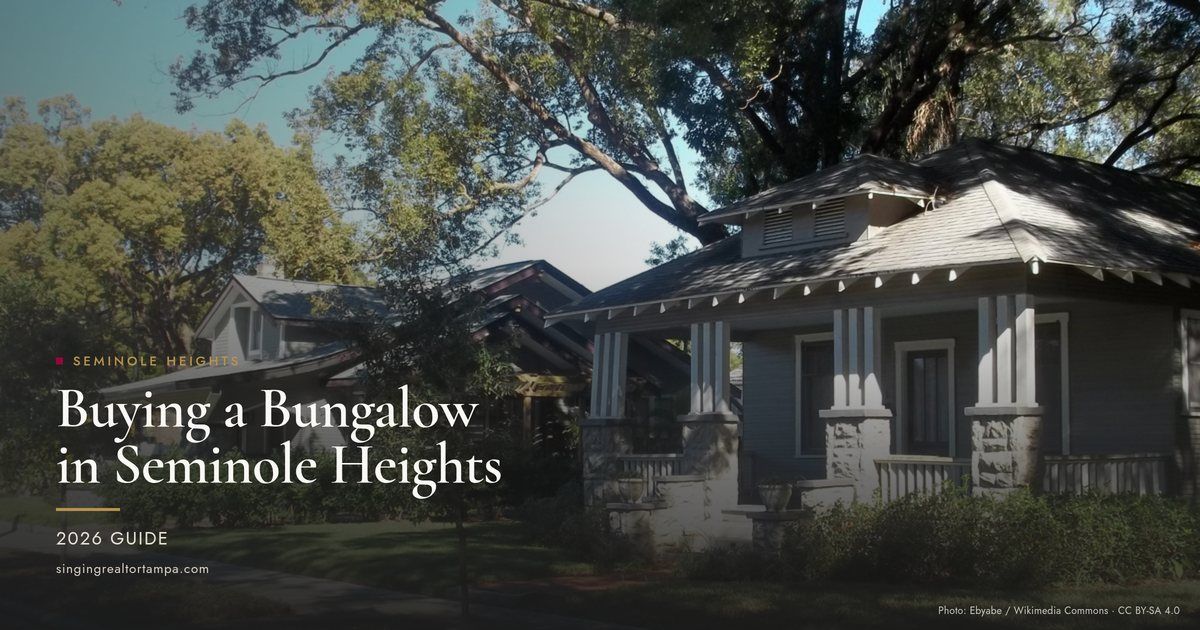
Header photo by Ebyabe, via Wikimedia Commons, licensed under CC BY-SA 4.0. Cropped, with title overlay.
Buying a Bungalow in Seminole Heights: The 2026 Guide (Old, South & Southeast)
I spend a lot of ordinary days on these oak-lined streets. I’ve already written about moving to Seminole Heights and why the neighborhood keeps showing up on best-of lists. This guide is different. If you’re browsing homes for sale in Seminole Heights and you have a bungalow in mind, here’s what I’d want you to know before you write an offer.
Homes for sale in Seminole Heights: start with the three pockets
Seminole Heights isn’t one street grid with one kind of house. The City of Tampa treats Old, South, and Southeast Seminole Heights as their own neighborhoods. I keep a Seminole Heights overview on my site, plus a page for each pocket, and you can also look up a block with the city’s Find a Neighborhood tool. I’m not going to draw street-by-street boundary lines here, because the city’s neighborhood pages don’t publish a full written boundary list. When it matters, check the address.
Old Seminole Heights
The city’s Old Seminole Heights page describes early-1900s bungalows, and notes that some homes here are included in National Register and local historic districts. That’s the important buyer takeaway: historic-district rules follow the address, not the neighborhood name. If a listing in Old Seminole Heights has the porch and rafter tails you love, confirm whether that lot is inside a district before you plan a new roof, windows, or an addition.
South Seminole Heights
The city’s South Seminole Heights page says the neighborhood has about 1,250 homes, with 1920 bungalows sitting alongside 1950s and 1960s ranches and more recent houses. Businesses run along three borders of the neighborhood. Rivercrest Park follows the Hillsborough River from Hillsborough Avenue to Martin Luther King Jr. Boulevard, and the city notes a cobblestone street in the area. If you’re looking at homes in South Seminole Heights, don’t assume every house is a 1920s bungalow — and don’t skip the park if you want a weekend walk by the river. The city currently has a boardwalk, seawall, and docks project at Rivercrest in design and permitting, with an estimated cost of $1,100,000, so it’s worth checking current park conditions before you go.
Southeast Seminole Heights
The city’s Southeast Seminole Heights page describes an early suburb and notes that Tampa’s city limits once stopped at Buffalo Avenue, now Martin Luther King Jr. Boulevard. The page says the neighborhood is made up primarily of restored bungalows. For current homes in Southeast Seminole Heights, that still means you should look at each house on its own: the age, the updates, and whether historic-district review applies.
When you’re ready to browse, start with current listings. If a song helps you think while you scroll, I keep a few of mine on the songbook page. No pressure. It’s just me.
What makes a Tampa bungalow
“Bungalow” gets used loosely in listings, so I like to go back to the city’s own description.
The City of Tampa’s Seminole Heights Historic District Design Guidelines say the neighborhood has a large concentration of Bungalow-style houses influenced by Florida Cracker, or vernacular, architecture, and that the style was popular in suburban development in the early 1910s and 1920s. The guidelines note that bungalow plans flooded the market through catalogs, appear in a wide variety of designs, and that “no two bungalows designed are alike.” As the 1920s approached, the same document says, the bungalow became one of Tampa’s most popular residential styles.
Craftsman details show up throughout the district. The guidelines call out a mix of materials, brick piers or columns, multiple gable roof lines, “camel-back” or “airplane” second stories, multi-lite windows, detailed rafter ends, exposed beams, and interior millwork. Many of the houses you’ll tour have a wide front porch. That’s not just charm. It’s part of how these houses were designed to live in Florida weather.
The city’s 2024 historic designations book puts a finer date range on the local historic district itself: a large concentration of bungalow-style residences built between 1912 and 1939, which is also the district’s period of significance. That book describes the district as about 215 acres, with 374 contributing buildings and 326 non-contributing buildings. The Seminole Heights historic district map accepted by the Historic Preservation Commission on September 11, 2018, uses that same 1912–1939 period.
A house built later, or heavily altered, can still be a lovely place to live. It just may not be the bungalow the guidelines are describing. Read the listing date, then look at the house with your own eyes.
The local historic district, and what it means for a buyer
This is the part I don’t want anyone to discover after closing.
The Seminole Heights local historic district is not the same thing as “all of Seminole Heights.” The city’s designations book records a National Register listing in 1993 and a local historic designation in 1995. Local review is what can affect a building permit. National Register listing is a separate honor. The city’s Old Seminole Heights page also notes that some homes there are included in National Register and local historic districts. Check the specific address.
The city’s historic district maps are the starting point, including the Seminole Heights district map. Maps are not the last word on whether a building is contributing or non-contributing. City historic preservation staff can help you confirm the status of a property.
If the house is in the local historic district, the design guidelines are clear: for proposed construction or demolition, a property owner must obtain a Certificate of Appropriateness from the Architectural Review Commission before starting construction or receiving a building permit. Some work can be approved by A.R.C. staff. Other applications go to a public hearing. The guidelines also say a Certificate of Appropriateness is not required for paint colors, and it is not required for work on the interior of a building. Roof or roofing changes, window and exterior material work, additions, and demolition are the kinds of projects that typically need review. I’m not a permitting office, so treat that as a heads-up, not a permit ruling.
The city recommends contacting staff early if you’re planning rehabilitation, new construction, or an addition. Reach the Architectural Review & Historic Preservation Division at (813) 274-3100, Option 3, or historicpreservation@tampagov.net, and start at the city’s Historic Preservation pages. If you’re buying with a renovation in mind, have that conversation before you fall in love with a floor plan that depends on a new front facade.
A buyer inspection checklist for an older bungalow
An older bungalow can be a wonderful house. It also deserves a careful look. This is due diligence, not a repair estimate, and it isn’t legal, tax, insurance, or lending advice. Hire people who are licensed for the work, and let their reports tell you what the house needs.
Florida’s Chief Financial Officer, working with InterNACHI, publishes Home Inspection 101. That guide describes a home inspection as a visual examination of a property’s major structures, systems, and components. In Florida, home inspectors are licensed by the Department of Business and Professional Regulation; you can verify a license before you hire. A standard inspection typically covers the roof, exterior, foundation and structure, plumbing, electrical, HVAC, attic and ventilation, and doors, windows, and interior. Ask about the scope of work before the visit, go if you can, and get a written report.
On a bungalow, I’d pay especially close attention to:
- Roof. The guide includes roofing materials, flashing, ventilation, drainage, chimneys, and roof penetrations. On an older house, also ask the age of the roof and whether anyone has already flagged leaks. If the home is in the local historic district, remember that a roof replacement can require a Certificate of Appropriateness.
- Electrical. A standard inspection looks at the service panel and circuit breakers, outlets and switches, grounding and bonding, and smoke and carbon monoxide alarms. Older houses sometimes need a closer look from a licensed electrician if the inspector flags the panel or wiring.
- Plumbing. That includes supply lines, drains and vents, the water heater’s age and condition, and fixtures. Some buyers also ask about a sewer-line scope on an older house. That’s a conversation with your inspector, not a requirement I’m setting for you.
- Foundation and structure. The guide includes foundations, crawl spaces, walls, ceilings, floors, and load-bearing elements. Look at the written findings, not just what you notice from the porch.
- Windows. Doors, windows, and the interior are part of a standard inspection. In the historic district, window replacement is often a reviewed exterior change, so know what you’re buying before you budget for new ones.
- Termites. The Florida Department of Agriculture and Consumer Services notes that subterranean termites, including Eastern subterranean and Formosan termites, are found throughout Florida, and it recommends having a home inspected annually by a licensed pest control company. Ask for a current termite inspection as part of your due diligence.
- Insurance and flood zone. This is homework, not a recommendation of any policy. Look up the address on the FEMA Flood Map Service Center. FEMA notes that most homeowners insurance doesn’t cover flood damage. Talk with your insurance professional about coverage for an older home and about flood. I can’t tell you what to buy.
If the report raises bigger questions, a licensed electrician, plumber, roofer, or structural engineer can take the next look. Take a breath. The point of an inspection is to help you decide with clear information.
Property tax season is a good time to slow down
Hillsborough County’s 2026 property tax bills have just come out. I think that’s a useful moment to pause, even if you’re more excited about porch swings than millage rates.
The tax bill you see in a listing file is the current owner’s bill. It is not automatically the bill you will pay after closing. Homestead exemptions and related savings belong to a qualifying owner’s primary residence, and a new owner has to apply if they qualify. I’m not a tax advisor, and this isn’t tax advice. For the calendar, discounts, Tampa’s millage rate, and a plain-English look at homestead, I put the details in my 2026 Tampa Bay property tax guide. If you want a sense of value on a house you already own, you can also start a home valuation. For questions about your own tax situation, talk with a tax professional or the property appraiser’s office.
Coffee, the Sunday Market, and a walk by the river
House hunting goes better when you also get a feel for a regular weekend, not just an open house.
DI Coffee Bar has a Seminole Heights shop at 6114 N. Central Avenue. It is open Monday through Friday 6:30 a.m. to 3 p.m., and Saturday and Sunday 8 a.m. to 5 p.m. (813-232-4495).
The Seminole Heights Sunday Market, run by Tampa Bay Markets, is a year-round indoor and outdoor market held on the second Sunday of each month from 10 a.m. to 2 p.m. It is at American Legion Post 111, 6918 N. Florida Avenue, Tampa, FL 33604, and offers free parking.
If you want air and oak shade, Rivercrest Park in South Seminole Heights is the city’s riverfront park along the Hillsborough River, with the boardwalk project I mentioned above. It’s a simple way to see a different side of the neighborhood than a listing photo can show.
If you’d like a local guide
If you want a second set of eyes on a bungalow, or you just want to talk through a pocket before you start touring, book a time with me. I live next door, and I’m happy to walk the process with you. If you’re selling first, you can also start at sell or request a valuation.
By the Numbers
- South Seminole Heights has about 1,250 homes, with 1920 bungalows sitting alongside 1950s and 1960s ranches and more recent houses.
- The Seminole Heights local historic district is about 215 acres, with 374 contributing buildings and 326 non-contributing buildings.
- The district’s period of significance is 1912–1939.
- The city’s designations book records a National Register listing in 1993 and a local historic designation in 1995.
- The city currently has a boardwalk, seawall, and docks project at Rivercrest Park in design and permitting, with an estimated cost of $1,100,000.
- DI Coffee Bar’s Seminole Heights shop at 6114 N. Central Avenue is open Monday through Friday 6:30 a.m. to 3 p.m., and Saturday and Sunday 8 a.m. to 5 p.m.
- The Seminole Heights Sunday Market is held on the second Sunday of each month from 10 a.m. to 2 p.m. at American Legion Post 111, 6918 N. Florida Avenue, Tampa, FL 33604.
The Bottom Line
Frequently Asked Questions
What should I know before buying a bungalow in Seminole Heights?
Know which pocket the house is in, whether it sits in the local historic district, and what a licensed inspection says about the roof, electrical, plumbing, foundation, windows, and termites. Look up the flood map, and don’t treat the seller’s property tax bill as your future bill.
Are there homes for sale in Seminole Heights in Old, South, and Southeast?
Yes. Inventory changes, so I wouldn’t count on a snapshot staying current. Browse current listings, then use the Old, South, and Southeast Seminole Heights pages to get oriented.
What is a Tampa bungalow?
In Seminole Heights, the city’s design guidelines describe Bungalow-style houses, often with Craftsman details, that were especially popular in the 1910s and 1920s. Many have front porches, mixed materials, gabled roofs, and multi-lite windows. Some have a “camel-back” or “airplane” second story. Not every house in the three pockets is a bungalow.
Is all of Seminole Heights a historic district?
No. The local Seminole Heights Historic District covers a defined area, locally designated in 1995, and it does not automatically include every house in Old, South, and Southeast Seminole Heights. Confirm the address with the city’s district map and Historic Preservation staff.
What does the historic district mean for exterior changes?
If the property is in the local district, you generally need a Certificate of Appropriateness before construction, demolition, or a building permit for exterior work. Some applications are staff-approved; others go to a public hearing. Paint color and interior work are called out as not requiring a Certificate of Appropriateness. Start with city staff early if a renovation is part of your plan.
What should I inspect in an older bungalow?
Use a Florida-licensed home inspector, and consider a licensed termite inspection as well. A standard home inspection typically covers the roof, electrical, plumbing, foundation and structure, and windows, among other systems. Look up the FEMA flood map for the address, and talk with your insurance professional about coverage. I don’t provide insurance or lending advice.
How do property taxes work when I buy?
The bill in the listing is the current owner’s bill. Homestead is something a qualifying new owner applies for; it doesn’t automatically transfer with the house. I explain the 2026 calendar and the basics in my property tax guide. For advice about your situation, talk with a tax professional.
What’s a good way to spend a weekend in the neighborhood?
Grab a coffee at DI Coffee Bar on North Central Avenue, go to the Seminole Heights Sunday Market on the second Sunday of the month, and take a walk at Rivercrest Park.
- City of Tampa, Find a Neighborhood (https://www.tampa.gov/neighborhoods): look up which city neighborhood a block is in
- City of Tampa, Old Seminole Heights (https://www.tampa.gov/neighborhoods/old-seminole-heights): early-1900s bungalows and notes that some homes are in National Register and local historic districts
- City of Tampa, South Seminole Heights (https://www.tampa.gov/neighborhoods/south-seminole-heights): about 1,250 homes, 1920 bungalows alongside later ranches, and businesses along three borders
- City of Tampa, Southeast Seminole Heights (https://www.tampa.gov/neighborhoods/southeast-seminole-heights): early-suburb description and primarily restored bungalows
- City of Tampa, Rivercrest Park project (https://www.tampa.gov/project/pr-22021): park along the Hillsborough River and the boardwalk, seawall, and docks project
- City of Tampa, Seminole Heights Historic District Design Guidelines (https://www.tampa.gov/sites/default/files/document/2026/seminole-heights-design-guidelines_ada_0.pdf): bungalow-style description, Craftsman details, and Certificate of Appropriateness rules
- City of Tampa, 2024 historic designations book (https://apps.tampagov.net/DepartmentPDFs/162381/city-of-tampa-designations-book-final-2024/index.html): 1912–1939 period of significance, about 215 acres, and 374 contributing and 326 non-contributing buildings
- City of Tampa, Seminole Heights historic district map (https://www.tampa.gov/document/seminole-heights-historic-district-map-197591): local historic district map accepted September 11, 2018
- City of Tampa, historic district maps (https://www.tampa.gov/historic-preservation/info/district-maps): starting point for checking whether an address is in a local historic district
- City of Tampa, Historic Preservation (https://www.tampa.gov/historic-preservation): Architectural Review & Historic Preservation Division contact
- Florida Chief Financial Officer / InterNACHI, Home Inspection 101 (https://myfloridacfo.com/docs-sf/insurance-consumer-advocate-libraries/ica-documents/home-inspections-101.pdf): what a standard Florida home inspection typically covers
- Florida Department of Business and Professional Regulation, license verification (https://www.myfloridalicense.com): verify a Florida home inspector license
- Florida Department of Agriculture and Consumer Services, subterranean termites (https://www.fdacs.gov/Consumer-Resources/Health-and-Safety/Protect-Your-Home-from-Pests/Termites/Subterranean-Termites): termite risk in Florida and licensed pest-control inspection
- FEMA Flood Map Service Center (https://msc.fema.gov/portal/search): look up the flood map for an address
- DI Coffee Bar, locations (https://www.dicoffeebar.com/locations): Seminole Heights shop address and hours
- Tampa Bay Markets, Seminole Heights Sunday Market (https://www.tampabaymarkets.com/seminole-heights-sunday-market): market schedule, location at American Legion Post 111, and free parking
Leanna Tillman, Realtor® with Y Realty, serving Tampa, St. Petersburg, Seminole Heights, Wesley Chapel, and Apollo Beach.
📱 (813) 334-6560 | 📧 singingrealtortampa@gmail.com
License: SL3645393
Curious what's on the market? Click here → https://singingrealtortampa.com/listing
FROM OUR BLOG
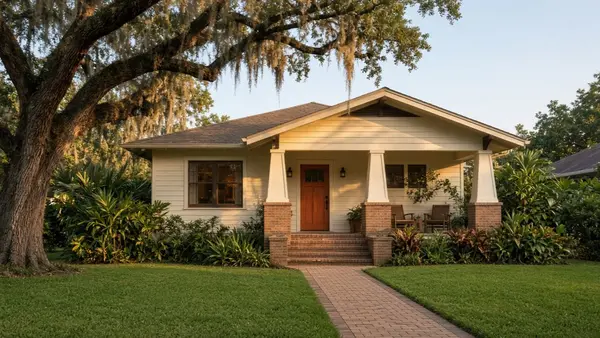

South Tampa Access Map: What Nearby Neighborhoods Really Cost
South Tampa Access Map: What Nearby Neighborhoods Really Cost By Leanna Tillman, Realtor® | Tampa Bay Real Estate Quick Answer: Hyde Park's median home price hit $1.2 million in August 2026, and Davis Islands sits even higher at $1.56 million. Head 15 to 45 minutes away and prices drop fast. Seminol
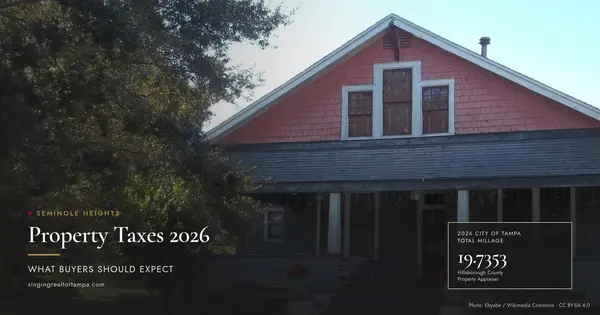
Seminole Heights Property Taxes 2026: What Buyers Should Expect
A bungalow in the Seminole Heights Residential District, Tampa, Florida. Photo by Ebyabe, via Wikimedia Commons, licensed under CC BY-SA 4.0 (https://creativecommons.org/licenses/by-sa/4.0/). Cropped, with title overlay and millage callout. Seminole Heights Property Taxes 2026: What Buyers Should Ex
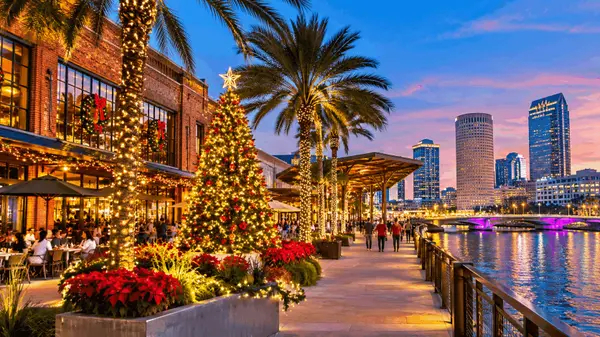
2026 Tampa Bay Holiday Guide: Christmas Lights, Markets & Events
Tampa Bay Local Guide | November 2026 Looking for the best holiday events in Tampa Bay in 2026? From Christmas lights and waterfront celebrations to holiday markets, ice skating and free family activities, Tampa Bay is full of festive ways to celebrate. Whether you're a longtime Tampa resident, visi